The ICC’s chief prosecutor has been removed over allegations of sexual misconduct

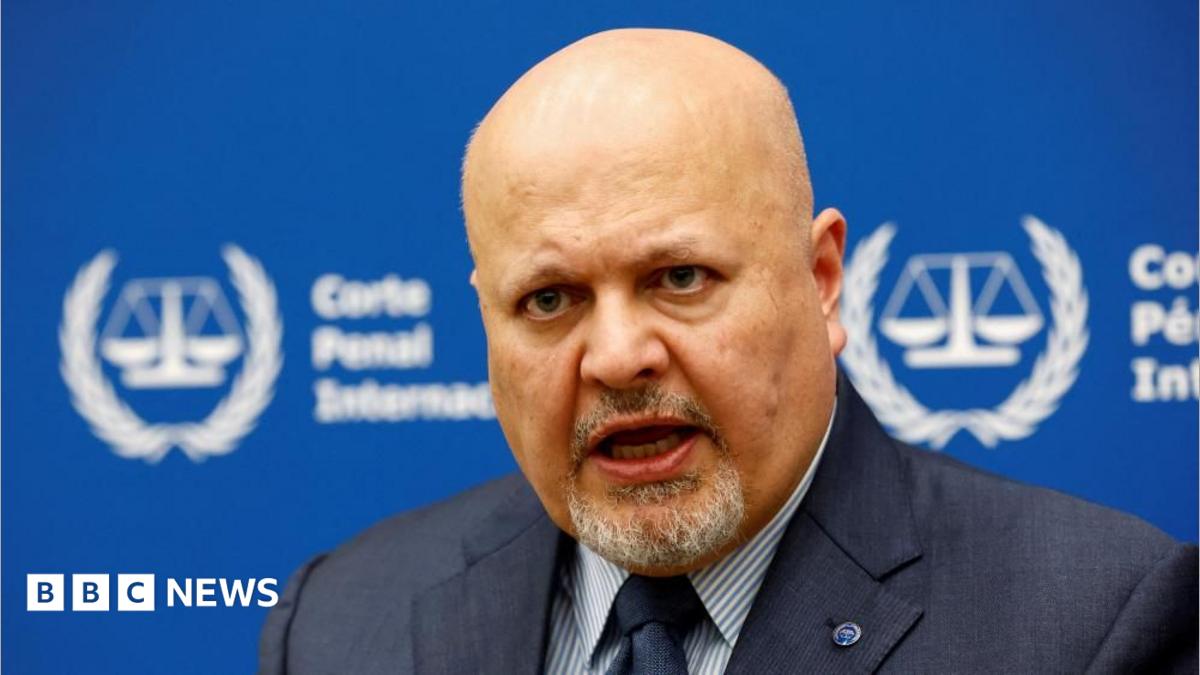
Members of the International Criminal Court (ICC) voted to fire Karim Khan as chief prosecutor over allegations of sexual misconduct.
Chosen as the ICC’s third prosecutor in 2021, Khan was suspended last month. The decision to remove him was passed by 82 votes.
The court’s watchdog found in June that he committed “breach of duty and misconduct” by engaging in inappropriate sexual relations with an ICC employee and sought to stop him from pursuing his complaint.
Khan has repeatedly denied all the allegations against him. His lawyer said he will challenge “the legality and fairness of the decision by all available legal means”.
It was not yet clear what legal options are still open to the fired prosecutor.
The whole process, however, goes beyond the fate of a single prosecutor and could overhaul the world’s only permanent war crimes tribunal.
The misconduct investigation has put the institution under scrutiny, deepened divisions within it and fueled an unprecedented campaign to weaken, and dismantle, the ICC altogether.
The fear among its supporters is that the court will appear weak and unable to deal with the world’s worst threats.
Khan, a prominent British barrister, has been on voluntary leave to fight the allegations since May 2025. He remains suspended from practicing law in the UK, after the Bar Standards Board ordered a temporary ban while it conducts its own investigation.
He could not attend the vote, which was held at the headquarters of the United Nations, in New York, because he was denied entry to the United States under sanctions imposed by the Trump administration in connection with the ICC investigation into alleged war crimes by Israeli officials in Gaza.
Regardless of his removal, the controversy is unlikely to end there.
This decision follows a very sensitive process that has left the court under intense scrutiny.
In May 2024, allegations that Khan had engaged in sexual misconduct involving a female employee were reported to the ICC by a third party.
The court’s Independent Oversight Mechanism (IOM) opened an investigation, but the case was closed after the suspect refused to participate.
Critics of the program say the investigation was mishandled, undermining the IOM’s credibility.
The investigators concluded that there was not enough evidence to prove these allegations.
A second referral was made in October 2024. The matter was then referred to the United Nations Office of Internal Oversight (OIOS), which is conducting a wide-ranging investigation into allegations of sexual misconduct and abuse of power.
That investigation ran from November 2024 to December 2025 and produced more than 5,000 pages of evidence and testimony.
The OIOS findings were then reviewed by a three-judge panel tasked with advising whether Khan’s conduct amounted to misconduct, mild misconduct, or no misconduct.
The allegations have come at a time of extraordinary pressure on the ICC, coupled with heightened political tensions.
The United States imposed sanctions on Khan after he sought an arrest warrant for Israeli Prime Minister Benjamin Netanyahu and former Defense Minister Yoav Gallant on charges related to the Gaza war.
Washington’s attitude on the court as a whole has grown considerably in recent years.
Earlier this month, the US launched a new “whole of government” campaign to dismantle the ICC “brick by brick” in what it calls a threat to American sovereignty, promising visa bans, asset freezes and diplomatic pressure to withdraw from the court or deny its jurisdiction over its nations.
The United States, Russia and Israel are not members of the ICC. However, the court can exercise jurisdiction over crimes committed by its own nationals on the territory of ICC member states.