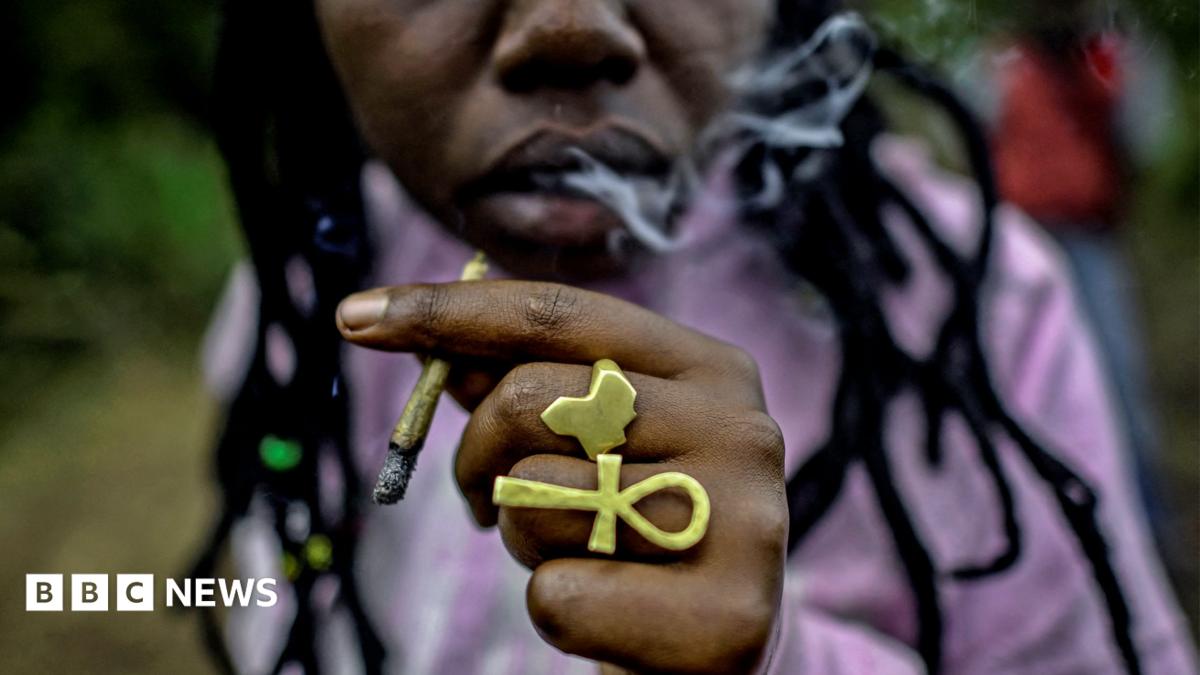
The High Court of Kenya has rejected a request by a Rasta group to legalize the use of marijuana for religious purposes.
The Rasta community has argued that the ban on smoking marijuana violates their rights to freedom of religion and belief guaranteed under the constitution.
In a landmark judgment, Justice Bahati Mwamuye said the public had failed to prove that drug laws infringed on their constitutional rights, but acknowledged the need for a wider national debate on cannabis.
There has been an ongoing push to legalize cannabis in Kenya, with advocates arguing that its controlled cultivation and trade could create jobs, raise tax revenue and support industrial and medical uses.
Under Kenya’s Narcotic Drugs and Psychotropic Substances (Control) Act, possession of marijuana remains a criminal offence.
A person convicted of possessing marijuana for personal use is liable to up to five years in prison or a fine of up to $800 (£600).
Growing marijuana carries a fine of $1,900 or three times the market value of the plants, whichever is greater, and/or up to 20 years in prison.
Severe penalties apply to trafficking and other drug-related crimes.
In their petition, the Rastafari Society of Kenya argued that marijuana is a sacred sacrament in their faith and asked for permission for followers to grow, possess and use it privately during worship without fear of arrest.
It concluded that it was not asking for the legalization of marijuana, but a limited exemption for religious purposes in private homes and designated places of worship.
In their submission, Rastas argue that smoking marijuana is part of their theology that should be respected and supported.
But the government opposed their request, saying that religious freedom would undermine the enforcement of Kenya’s anti-drug laws and would create loopholes for illegal marijuana trafficking.
Justice Mwamuye also found that the evidence presented regarding the centrality of cannabis to the Rasta religion was inconsistent and insufficient to establish that its use was an integral part of the religion.
He insisted on the constitutionality of drug laws that prohibit the cultivation, possession and use of marijuana, which has greatly hampered the Rasta’s six-year war.
The judge noted that any exemption allowing the use of marijuana for religious purposes would require a strong constitutional and legal basis.
“We have to have direct discussions about marijuana and what directions we should take,” said Justice Mwamuye.
“This is not just a Rasta community question. It is a national question that affects our entire community,” he added.
The decision comes seven years after another Supreme Court ruling recognized Rastafarianism as a protected religion in Kenya, finding that a school’s decision to expel a student because of dreadlocks violated his constitutional rights.
The number of Rastas in Kenya is unknown, but it is thought that the group is growing, especially among young people.
Their tradition of wearing dreadlocks is also related to Kenya’s anti-colonial history as many of the Mau Mau fighters who resisted British rule in the 1950s wore long hair and tied it as a sign of disrespect.