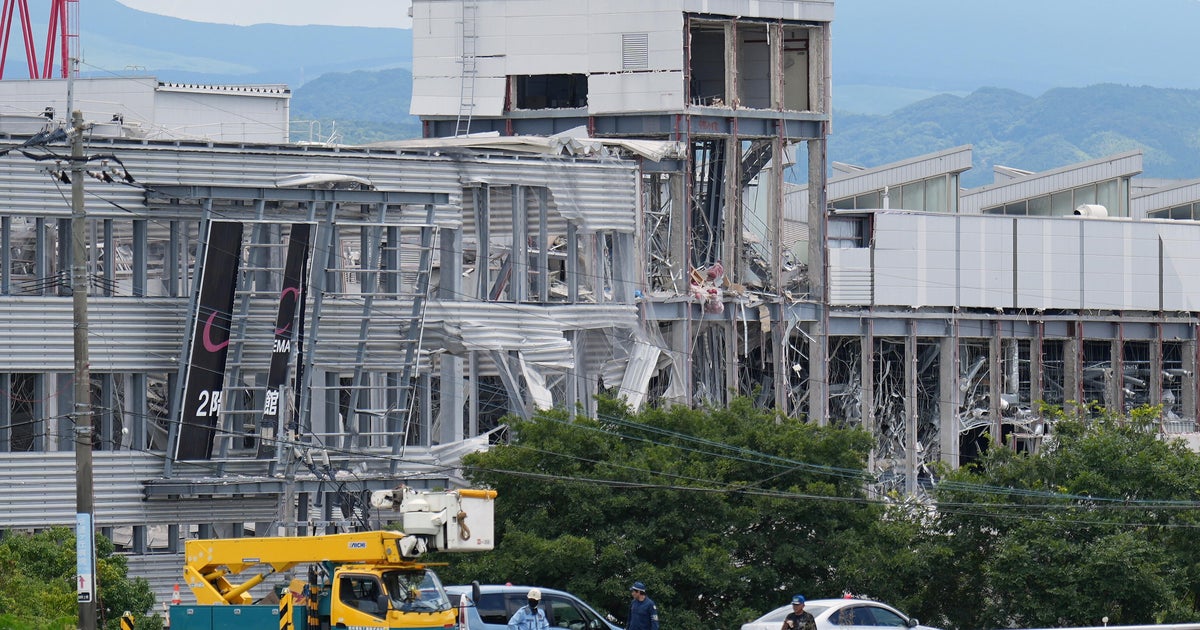
Israeli strike destroys last bridge over Litani River as fighting rages in southern Lebanon


Listen to this article
Average 5 minutes
The audio version of this article was created by AI-based technology. It can be mispronounced. We are working with our partners to continuously review and improve the results.
The Israeli strike destroyed the last bridge on the Litani River in southern Lebanon, according to a senior Lebanese security source, completely cutting off a tenth of Lebanon from the rest of the country, after Israel destroyed other crossing points during the war.
Fighting continued to intensify on Thursday in southern Lebanon, especially in the Lebanese border town of Bint Jbeil, a stronghold of Hezbollah and a strategic prize that Israeli Prime Minister Benjamin Netanyahu said the Israeli military was close to winning, in a press conference the previous day.
A senior Lebanese official said Lebanon’s assessment was that Israel wanted to secure a victory in Bint Jbeil before diplomatic progress could be made.
Israeli warplanes also unleashed a series of strikes on Thursday in the southern city of Nabatiyeh, sending a plume of black smoke into the heart of the southern Lebanese region.
Lebanon’s National News Agency said Thursday’s attack took place near the city’s industrial area and outside a supermarket on Nabih Berri Avenue, a main street lined with shops and residential buildings. These strikes, among the heaviest in the area since the start of the war, have also hit many areas of the city.

Israel has stepped up its bombing campaign in southern Lebanon in recent days as it seeks to extend security control over Lebanese territory in its war with Iran-backed Hezbollah. The Israeli army on Wednesday targeted three medical teams in Nabatiyeh in consecutive strikes as they worked to help civilians and rescue each other, killing four medics and wounding six others.
Meanwhile, in Israel, sirens blared to warn of incoming rockets, sending residents of several northern Israeli towns running to bomb shelters after Hezbollah announced new rocket attacks on Israel. There were no immediate reports of injuries.
Israeli attacks have killed more than 2,100 people in Lebanon since March 2 and forced more than 1.2 million to leave their homes, Lebanese authorities said. Hezbollah attacks have killed two Israelis, and 13 Israeli soldiers have died in Lebanon since March 2, Israel said.
In Israel, the leaders of Lebanon will talk, Trump said
The latest attack on Lebanon comes as US President Donald Trump said the leaders of Lebanon and Israel are expected to speak for the first time in decades on Thursday. Pakistan has said that peace in Lebanon is important to the talks being held between Washington and Tehran on ending the US-Israel war with Iran.
The expected phone call between the two leaders will take place after Israeli and Lebanese ambassadors held rare talks in Washington on Tuesday. Hezbollah said talks with Israel would deepen divisions among the Lebanese.
The war in Lebanon erupted from the US-Israel war with Iran on March 2, when Iran-backed Hezbollah opened fire in support of Tehran, prompting Israel to attack Lebanon just 15 months after the last major conflict.

Israel and Lebanon are holding their first direct talks in decades as questions surround the effectiveness of the US blockade of the Strait of Hormuz.
Israel’s security cabinet met late Wednesday to discuss the possible issue in Lebanon.
“Peace in Lebanon is important [Iran] peace talks,” said Tahir Andrabi, a spokesman for Pakistan’s Ministry of Foreign Affairs.
In the Truth Social post, Trump said he was “trying to find some breathing room” between Israel and Lebanon.
“It has been a long time since the two leaders spoke, like 34 years. It will happen tomorrow. Good!” Trump wrote in a post published late Wednesday.
Gila Gamliel, a member of Israel’s security cabinet, told Israel Army Radio that Netanyahu will “talk to the Lebanese president for the first time after so many years of no contact between the two countries.”
A senior Lebanese official told Reuters that Lebanon had no information about the phone call between Lebanese President Joseph Aoun and Netanyahu.
The contact between Netanyahu and Aoun will be a milestone in the relationship between Lebanon and Israel – countries that have remained at war since Israel was founded in 1948. Hezbollah opposes the connection between Lebanon and Israel.
Aoun, who led the US-backed Lebanese army before becoming president last year, said Israel’s withdrawal would be “an important step towards consolidating the ceasefire” for Lebanese troops to deploy in the south.
The Lebanese government has been at odds with Hezbollah over its decision to enter the war, having spent the past year seeking the peaceful disarmament of the group founded by Iran’s Revolutionary Guards in 1982.
Beirut banned Hezbollah military activities on March 2.
An Israeli military official said on Wednesday that the area south of Litani would be a “no-go zone for Hezbollah operatives,” reflecting Israel’s declared intention to control Lebanon’s southern border south of the river that meets the Mediterranean about 30 kilometers north of the Israeli border.
Netanyahu’s office and Aoun’s office did not immediately respond to requests for comment on any of the talks.
Washington expressed hope on Wednesday about reaching an agreement to end the war on Iran. The sides agreed to a two-week ceasefire in the Iran war on April 8, following Pakistan’s mediation.
Israel and the US said the campaign against Hezbollah was not part of that ceasefire, although Pakistan’s prime minister had said the deal would include Lebanon, as Iran wanted.
A senior Israeli official and a senior Lebanese official said Wednesday that Netanyahu’s government is under pressure from Washington to reach an agreement to end the fighting in Lebanon.